25 April 2012

Semana Santa, Holy Week


Travel Log:

Monday, April 2nd ~
Transportation from Santa Ana to Santa Marta went a little something like this: motorcycle+canoe+citybus+taxi+intercitybus+taxi = total time 6 hours, no more than 100 miles.

Checked-in at Irish-owned Aluna Casa & Café – a nice hostel less than 5 minutes walking distance from the Historic District. Had an amazing, romantic, gourmet dinner at El Bistro Restaurante and mojitos at [Bob] Marley’s Café. On our walk back to our hostel we came across a random adult league soccer game complete with spectators - at 11pm.

Jugo Natural
Tuesday, April 3rd ~
Our day dedicated to food!  Breakfast at Lulo was delicious—start with an arepa, add beans, cheese, and a fried egg, throw a few strips of crispy bacon across and top with fresh avacado and hot sauce. Jugo Natural de Maracuya was the best fresh juice we’ve had so far. Lunch at Marisol (just a few doors down) also amazing—Pineapple/Ginger and Mango/Blackberry juices. More sightseeing followed by appetizers at Agave Azul Mexican Restaurante (we’ve been craving Mexican). Finally, dinner at the #1 rated Ouzo (according to TripAdvisor). We had a chicken, bacon, pesto pizza (another thing we crave in Santa Ana) and it was perfection. We also tried a michelada, hot sauce, lime juice, pilsner in a salt-rimmed glass – would turn even a Budweiser into a good tasting beer, maybe.
We also met up with several other World Teach volunteers placed in other parts of the country, whom we haven’t seen since orientation. It was great to reconnect and share stories.

World Teach Cali, Bogota, Cartagena, Monteria & Baru!
In a nutshell, Santa Marta is like a mini-Cartagena. More intimate, great restaurants, more ex-patriots (English speakers), less hassle, easier to navigate. In general, great 2-day getaway, but not necessarily for its beaches.

Santa Marta
Wednesday, April 4th ~
Quick breakfast at Aluna’s Café, which was pretty standard but good. Then we started our adventure to Minca, a tiny village in the Sierra Nevadas. We were told there was a collectivo station, or a place to catch shared taxis not far from our hostel. [disclaimer: moms, you may not want to read further :) ]

We arrived at the address and found your typical Colombian corner tienda with benches and several people, who appeared to be waiting for a ride. About 20 minutes later an early-90s blue Mazda pulled up and the driver motioned for us to put our bags in the trunk.  One of the doors was jammed shut, so we all had to crawl in through the same side. As soon as we got out of the city limits, the car started sputtering, the driver started cursing in Spanish and sure enough we were stranded on the side of a dusty road in the Sierra Nevada foothills with no gas. It gets better. 
So then, while we’re standing on the side of the road because it was scorching hot in the car. The driver makes a call, which we assumed was to get us another ride. 20 minutes later another taxi arrived and we thought we were in the clear. Only, now the drivers are tying up the two cars using beat up old ropes. They told the other couple we were sharing the ride with to get in the taxi to distribute the weight more evenly and Micah and I got back in the collectivo and off we went another 20 minutes uphill to the nearest gas station, where we were all re-loaded into the collectivo and made our way the rest of the 45 minutes up the mountain to Minca. 

Just another day in Colombia...
After finally making it, our next adventure was finding our hostel, Casa Loma, or Hill House. We started seeing signs as soon as we got to Minca, which led us gradually up hill behind the Institución Educativa de Minca. From there we followed more signs, until we realized we were literally in the woods, hiking straight up a mountain, which was exhausting with our backpacks. When we finally reached the little bohemian oasis, we were relieved to see numerous colorful hammocks and an amazing view over the Minca Valley and Santa Marta in the distance. We stayed in a tree house; similar (but not as cool) to the one we stayed in when we got married in St. John.

View from Casa Loma
Thursday, April 5th ~ Hiked 2 hours up a mountain road to a coffee finca, built in 1892 and barely changed since. We don’t get fresh coffee in Santa Ana, so we were elated to have some that was fresh roasted, organic, and fair trade!

La Victoria Finca
Minca was an awesome experience. It was great to be up in the mountains, with slightly cooler temperatures, less people, and we saw some spectacular sunsets and toucans!
HIGH: Thursday night sunset with fresh Maracuya LOW: Not making it to the “Lost Waterfall”, next time!
Sunset over Minca

27 March 2012

3 MONTHS IN...


Celebrating Juli's Birthday, Barú-style!
It’s been just about 3 months (or ¼ of the way) since we first stepped foot in South America and although there have definitely been challenges amidst the adventure; we’re learning to appreciate all that Colombia has to offer. So our Español is still far from fluent (okay it’s more like Spanglish, but the Costeño accent is hard!) and teaching English here is much more difficult than we imagined, still…life is good.

We’ve blogged about the bugs and the lack of clean water, the power outages and the heat. But with all of the challenges, we are extremely fortunate to have some pretty great perks living on Isla de Barú.
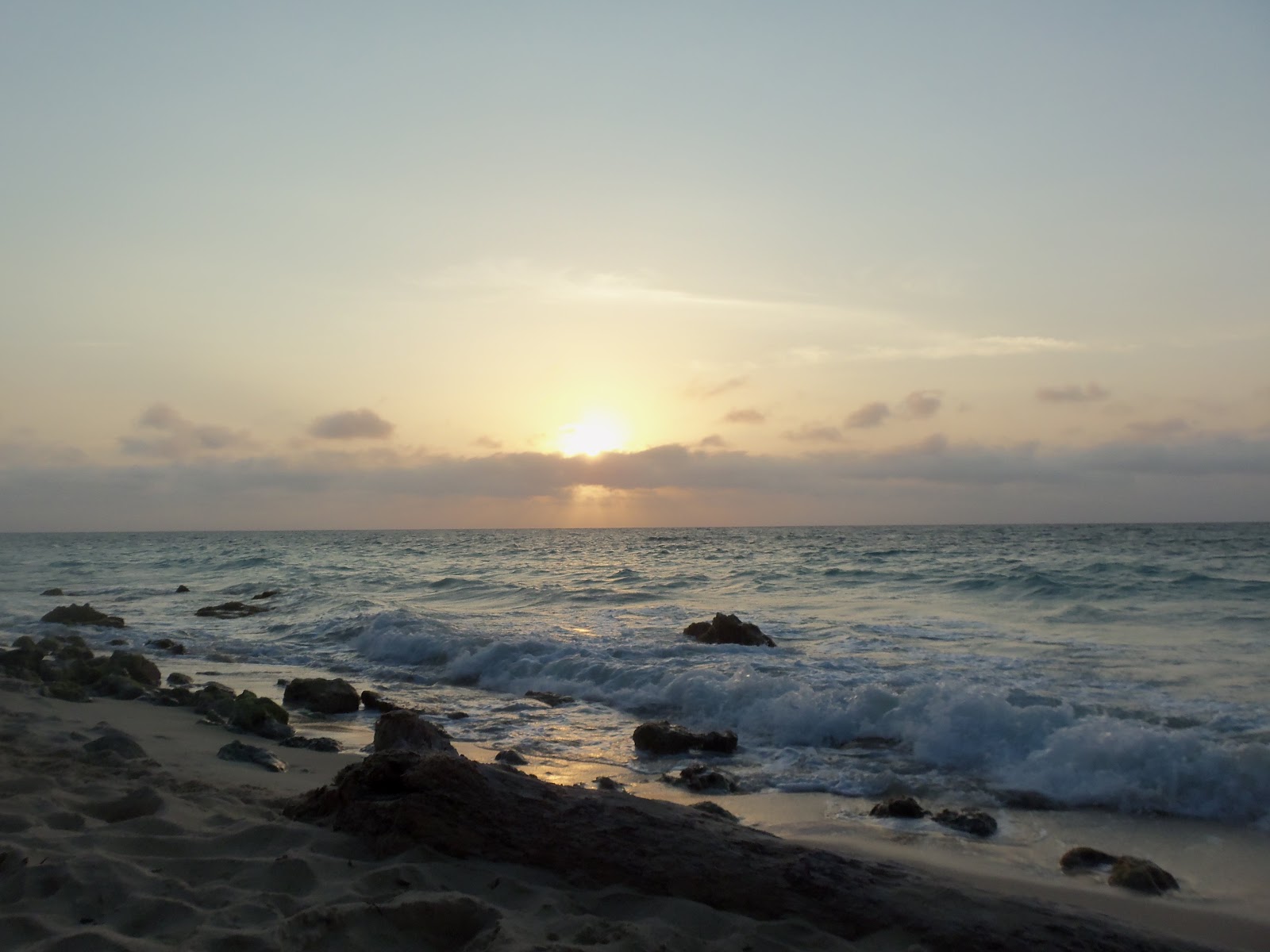
Sunset on Playa Blanca
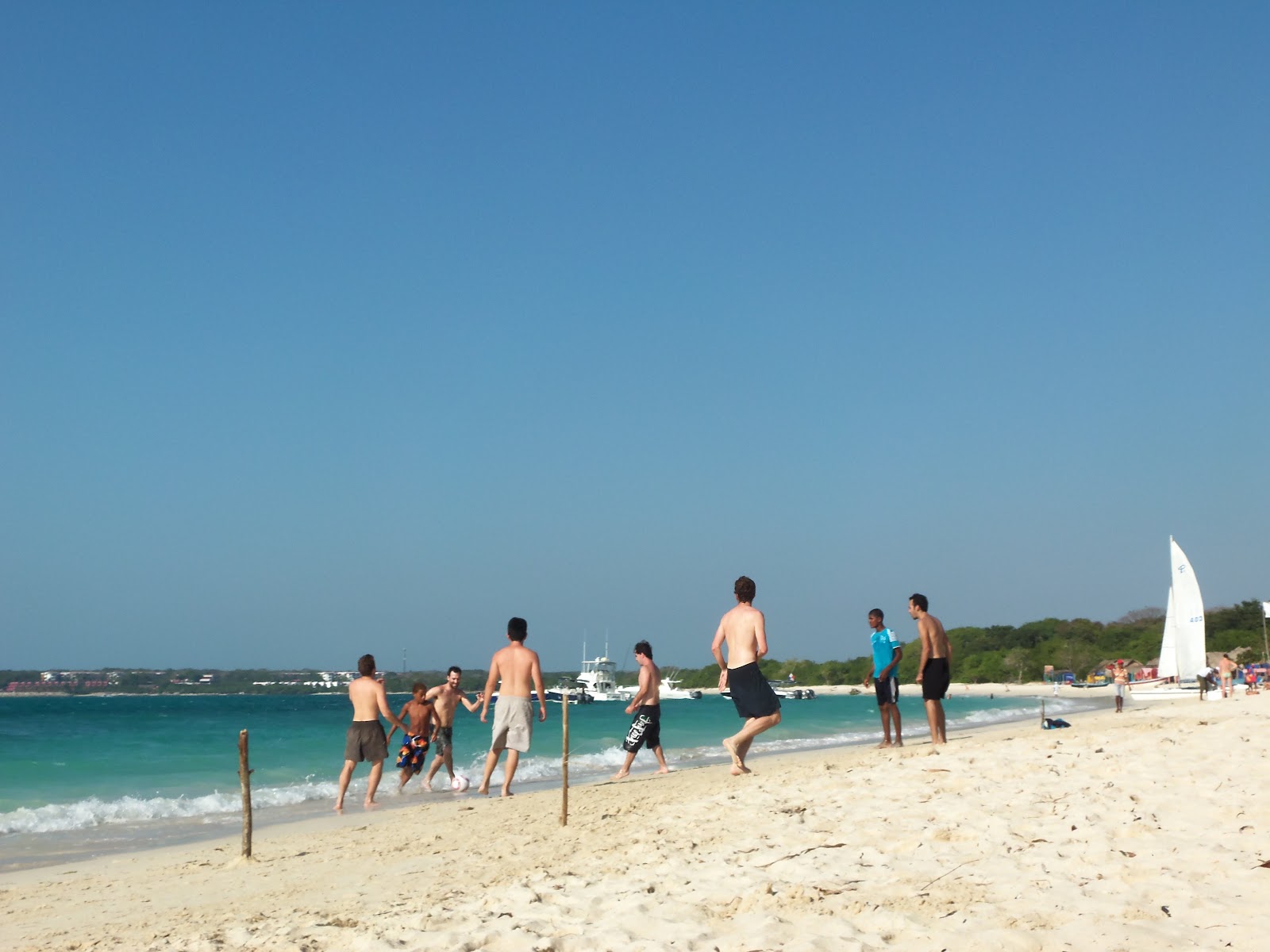
This past weekend we celebrated another volunteer’s birthday with a fiesta on Playa Blanca, where we camped overnight in cabanas. We were treated to a spectacular sunset over the Caribbean, followed by delicious food, music and of course, dancing. Later that night, we were walking along the beach, looking up at the stars, feeling grateful for everything we were experiencing – it was one of those moments in life where we wished we could bottle it all up and save it forever.

Beach Cabanas 
The next morning we awoke to a perfectly beautiful day on the beach. We spent the day relaxing in the sun and enjoying the warm, turquoise waters, wishing the weekend didn’t have to end.

A pretty decent trade off for the difficulties of living in Santa Ana, if you ask us.


20 March 2012

It’s Kind of Like…


Sunrise over Santa Ana

We were sitting around discussing how we could accurately describe our daily lives in Santa Ana to our friends and family back home and we’ve come to the conclusion that it’s kind of like being on a really long camping trip.

The amenities, while comfortable and more than we expected, are just not quite the same as home. While we have a flush toilet, it doesn’t really work properly and involves a little jiggling and finagling to get things going. The shower is only warm when the water has been cooking in the pipes all day—Santa Ana’s version of a solar shower. Camp stoves we’ve used back home are more efficient than our teeny gas stove here. Our bed is comparable to a camping pad. Drinking water and conservation - high priorities all day every day. We’re constantly shooing, smooshing, catching and/or swatting bugs of all shapes and sizes. And frogs. And scorpions. Basically, there are animals all around. With the frequent power outages and dirt pathways, we’re putting our Black Diamond headlamps to good use (Thanks Adam). We’re never quite clean between the intense heat and ever-present dirt and sand, which collects on everyone and everything.

Luckily we love camping. Sandals, all the time. There is always music in the background. We can often see or hear kids playing outside. Beyond our tiny town, we’re surrounded by undeveloped wilderness and close to one of the most beautiful beaches. We have good times with good people every day. Nighttime entertainment consists of reading and playing cards. We can see the stars. We fall asleep to the sounds of nature every night. Now if only we could make s’mores… 

Fundación Educativa Instituto Ecológico Barbacoas


07 March 2012

5 Challenges of Living in Santa Ana (that we are learning aren't so bad after all)


1. Water & Power Outages:
Okay, so headlamps are a must and we’ve learned to keep a bucket of water on hand for toilet flushing, but all in all—not as bad as we thought. The power usually goes out during dinner a few times a week (luckily we have a gas stove) but it has only lasted through the night once, so far. Sleeping without a fan is the hardest part.

2. Hand-washing Laundry: It's not fun, but once you get the hang of it, it’s not the worst thing ever. It takes a long time and stains seem impossible, but fortunately the dress code is pretty simple on Isla de Baru. “Iron” is no longer in our vocabulary.

3. Bugs: When you get bit, it sucks. It seems on any given night you can either be bite-free or completely covered and itching like crazy. There is no in between. However, we’ve experienced much worse mosquitoes elsewhere in the Caribbean. Sure, it’ll get worse when the mysterious, unpredictable rainy season arrives – but in the mean time we are happy to sleep mosquito net-free! 

4. Cold Showers: This is simple – it’s a million degrees outside and we have no air conditioning at home or at work. Enough said.

5. Lack of Resources: There is one restaurant that serves one option per meal, but its always tasty and we actually have enjoyed cooking for ourselves. There is no post office, no bank or ATM, and no grocery store. We are getting used to shopping just for what we need each day at the nearby tiendas. You just walk up to the counter and ask for what you want. If they don’t have it you walk 30 seconds to the next one and try again until you find something relatively close to what you thought you wanted. It’s easy and kind of nice to get to know the different tienda owners and their regular patrons. If nothing else, this has been a great excuse for us to make the journey into Cartagena on the weekends, which is always a fun adventure.

More on that next post...

Spiders: scary but rare, so far.
Cooking for ourselves proves delicious!

22 February 2012

CARNAVAL!!!


This past weekend we had our first Carnaval experience! Barranquilla, a city further northwest on the Colombian coast, is famous for this Caribbean cultural festival. For the entire month of February the city hosts party events and parades. This weekend (approximately 40 days before Easter) was the biggest and most outrageous and held the main events, including La Batalla de las Flores, or the Parade of Flowers.
Our friend, Oscar, and his family graciously hosted us with the other six Santa Ana volunteers (plus one from Cartagena). Oscar and his girlfriend, Mirna, showed us around and taught us the proper way to celebrate Carnaval. On Friday night, they took us to the Aguila Festival, which was in a huge stadium and showed the local soccer game on big screens. There was great live salsa music and in Colombia, where there is music there is always dancing. They were also kind enough to introduce us to the local tradition of covering fellow revelers in corn flour when they least expect it.


Saturday we woke up around 5:45 a.m. and claimed our spot for the parade, which was an exciting display of vibrant colors, live music, dancing, exquisite costumes and beautiful people. Afterwards we walked to Mirna’s tia’s house, where several brave volunteers (including Micah) enjoyed traditional Mondongo Soup (cow intestines), which was delicious. Later that night, while Oscar and Mirna were at the Marc Anthony concert, we met up with other WorldTeach volunteers living in Barranquilla, as well as others visiting from Bogotá and Montería, for dinner and drinks (thanks again M.R. and David!).


It was a great night, but felt a little strange to have a choice of restaurants and clubs to patron. Any kind of food or drink we could want within a few blocks. Guess we are taking to the island lifestyle quicker than we thought we would. After only 1 month in Santa Ana we are learning how little we really need in order to be happy and live comfortably. 
Overall, we had an amazing weekend learning about and celebrating coastal Colombian culture. We were impressed by the city of Barranquilla and we are forever grateful for the hospitality of the Ruiz family.

07 February 2012

One Month in Colombia: CHECK.


Mother of one of Micah's students selling us mango on the beach.
This past Saturday marked one month in Colombia so far. That’s it. One month.
It seems like we were in Cota/Bogotá months ago and it has to be longer than two weeks on Barú.
But we don’t mean for that to sound negative. It’s just that a lot has happened since we arrived. In fact, a lot has happened since Saturday…

US/Colombia vs. Brazil
We all went to Playa Blanca on Saturday and had a great day. Weather was hot and sunny, as always. We found a perfect spot with sun and shade in front of a little restaurant owned by one of our student’s parents. Had a great game of fútbol with some students and Brazilians (we won!). Other than Steph stepping on a sea urchin and ending up with an archipelago of spiky spines in her foot, it was a great day.

Sunday, almost every one of us woke up with stomach issues.

Micah Dice:
I woke up Sunday with bad stomach issues that lasted until Monday afternoon. The nurse from my school forced me to go to the clinic in town, where they took my blood pressure, poked my stomach and said I have a parasite. I’m skeptical, but either way I feel better, and have a prescription for antibiotics if I don’t feel better in the next little while. Classes were good today; I had 2 blocks, so each class for 2 hrs. We were able to get a lot done and many of the kids asked why I didn’t come to school the day before and actually seemed to miss me.
While sick, I was able to finish the second Hunger Games book (only took me 3 days!) and I’m 1/3 of the way through the last in the series. Then it’s on to For Whom the Bell Tolls and then maybe I will finish Pride and Prejudice and Zombies (I started it, but too much P&P, not enough zombies).
Funny story from one of my 10th grade classes: a female student asked to be excused so she could go outside and fart. My male co-teacher spent the next 1/2 hour lecturing the girls on how to be more lady-like.

And one last thing…WTF PATS?!?!
Two of Steph's 4th Graders
Steph Dice:
I feel much better knowing Micah is better. It was pretty funny when the nurse came to our room and started yelling at him in Spanish saying that she “didn’t care if he didn’t think he needed to go. It would just keep returning if he didn’t”. She would not have taken no for an answer.
We lost power Tuesday during dinner, the second night in a row, so I walked to the nearest tienda with two other volunteers, Juli and Fiona, for some treats. On the way back, while trying to navigate the reconstruction of the main road through town, Fiona and I both fell knee-deep into a giant mud puddle that was slightly green and smelled of human waste (and probably was). My first instinct was to cry, but Fiona and our audience of locals were all laughing so I finally gave in to the humor of the situation. Although they laughed, there was no shortage of help as our new friend Juan rushed to get water to help us wash off. We were quite the entertainment for all. Meanwhile, another gringo (from France) showed up and did the same thing – in what seemed like slow motion, as we tried to warn him. Gringo trap? Probably not, but hopefully we’ll be able to navigate as well as the Santa Ana locals before too long.
Other than that excitement, and finishing three books in the past 2 weeks, I’ve just been trying to adjust to my classes. I expected things to be challenging and I anticipated behavior problems but some of my classes are beyond anything I could have imagined. Today was my hardest day so far but some classes are harder than others, so I’m confident each day will get a little easier. I hope!

Pre-Reconstruction Puddle

31 January 2012

2nd Week Update

Cartagena from Kayla's apartment

Cartagena de Indes: We ventured back to the mainland this past Saturday with the other volunteers for a pool party at a former Santa Ana volunteer’s new apartment. Later in the night we all had drinks and some snacks on top of the old Spanish fort that encircles Old Town, overlooking the Caribbean. Micah felt kind of stupid for coming all the way to Colombia and ordering a hot dog from a street vendor, but this was no ordinary hot dog (and yes they call them perros calientes)-- started with a grilled hot dog on a buttered and grilled bun, topped with queso, ketchup, fry sauce (just like in Utah!), tiny deep fried onions and potatoes, and relish – crunchy and delicious. We stayed at Hotel Marbella, which had amazing old Moorish architecture and was right on the ocean. We wouldn’t recommend it to most, but it worked on our volunteer budget. Next time we’d bring our own sheets! Overall it was a good break before starting a busy school week.
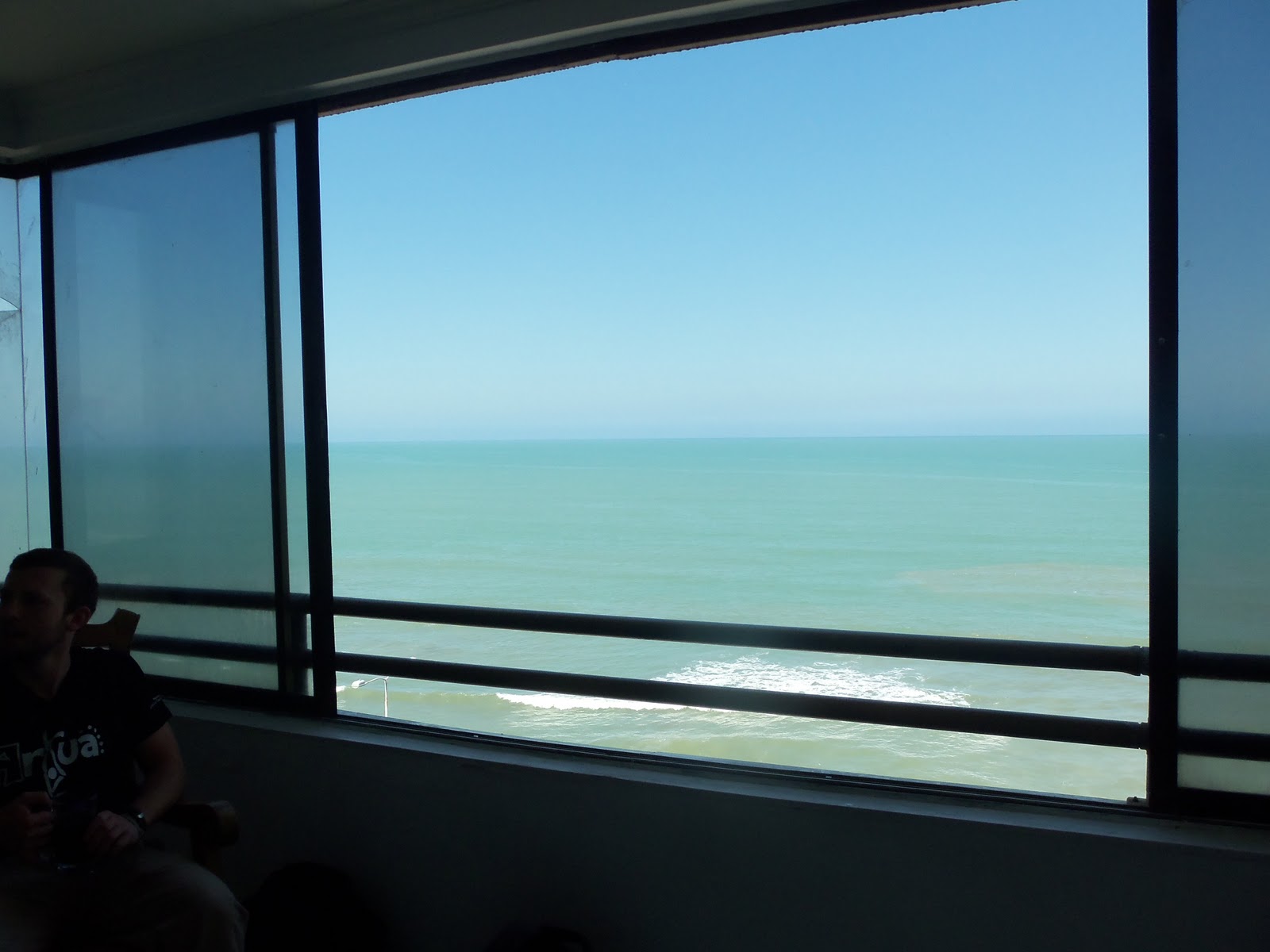
Caribbean View in Cartagena

Micah Dice (Says):

I’m exhausted. I’m teaching 25 hours a week but my days have been starting with canchas (assemblies) or staff meetings at 7am, followed by classes of 9-11th graders, which is the equivalent of  10-12th in the U.S., and finishing anywhere between 3:30 and 5:30pm. My school, Fundacion Educativa Instituto Ecologio Barbacoas, started the day after we arrived in Santa Ana last week and we still do not have set teaching schedules, which has been one of the most frustrating things about adjusting to working in Colombia.
With that out of the way, the highlight of my days has been the kids. Teaching high school is not easy but so far they have been excited to learn English and receptive to my lessons. My co-teacher, Raimundo, speaks English very well and I think we complement each other’s teaching styles.
Other than school life, I finally got to Playa Blanca on Friday for some much needed rejuvenation. I hope to spend much more time there over the coming year. Santa Ana is a town of very contrasting elements. At first glance, it looks run down and sad yet the people are full of life and incredibly friendly and welcoming. There is an ever-present thump of music – sometimes latin, sometimes reggaeton – always loud. There is a casita around the corner that sells homemade deditos con bocadillo y queso (fried breakfast pastries with guava paste and cheese) for about .50 cents USD. I wish I could eat them every day!
A classroom at Micah's school (the campus where we live)
Steph Dice:

I have had a much different experience than Micah so far. My school, Institucion Educativa de Santa Ana, is the public school and Micah’s is a private charter school. 6-11th grades are held from 6:30am until 11:30am and primary school is held from 1-6pm. There are 3 other volunteers at the same school.  The first week we arrived every day at 8am for staff meetings, which never actually started until closer to 9 and we were usually excused after only an hour or two. All meetings are held completely in Spanish, as I am the only profesor that doesn't speak Spanish (for now!). Since I was finished by noon every day I was able to go to the beach Monday and Thursday afternoons last week, in addition to Friday with Micah and the rest of the private school volunteers. My first trip was very crazy, as I have never been on a motorcycle and to get to the beach we ride 2 people per moto, behind the driver. It’s hot and sticky, but the breeze is refreshing and it’s really not as scary as I anticipated. The government is actually sponsoring the paving of the one and only road that goes through the island to Playa Blanca so it will be interesting to see the changes that causes to the island. It will be the only paved road on Isla de Baru.
Yesterday was the official first day of school for me, and today was my first day teaching. In Colombia they have a grade called Transicion, which comes between Jardin (kindergarten) and 1st grade, so teaching 3-5th grades is the equivalent of  4-6th grade in the U.S. I just learned this yesterday.
I did get to meet many students today and yesterday, which was so fun! The volunteers are the only white people most of them ever see, since many don’t have tvs or the luxury of visiting Cartagena frequently (it cost us about US$4.50 each way). Juli and I felt like celebrities. They all wanted to touch us and hold our hands and show us that they could say “HelloTeacherHowareyouI’mfine,thankyou” (really fast in one long word). I’m not sure if they think there is something wrong with me or if they’re just fascinated, but they can't get over my green eyes. They kept staring and wanting to look closely. It was funny and really cute. If you teach in the U.S. never take for granted the resources provided to you. Photocopiers, laminating machines, textbooks, even markers and pencils are a rare commodity here.
I can agree with everything Micah said about the town of Santa Ana – it really is a place of contrast and although I’m not as brave as Micah when it comes to trusting the cafeteria mystery meat or drinking the water…ok I won’t even brush my teeth with the tap water…I feel safe and welcome here.
Several classrooms at Steph's school

30 January 2012

First Week in Santa Ana


A lot has happened in the last week. We finished orientation on Jan. 22nd and flew from Bogotá to Cartagena. To get from Cartagena to Santa Ana on Isla Baru, we take a bus, a ferry (or a canoe) and then a motorcycle taxi. We are all settled into our "villa"/dorm room. The downstairs of the building has a shared kitchen space and a large multipurpose room for working, eating, etc. There are several dorm rooms downstairs for medical clinic students that also work in town. All 8 of the WorldTeach volunteers live upstairs. We have a long shared balcony where we can overlook part of town and hang out in the evenings when it cools down a bit. There are numerous farm animals scattered around, including the loudest donkey we've ever heard. Our rooms are painted bright turquoise - our twin bunk beds are actually pretty big and comfy. We haven't had to use the mosquito nets, but we also haven't had any rain yet. We are really fortunate to have a great living situation with 6 other volunteers that we enjoy being with. We all cook dinners together and help each other with lesson planning. 

It's been a bit challenging adjusting to the heat and humidity and the very different school systems-- but we will save that for next time. La playa, or beach, is a 10 minute moto-taxi ride away and it is absolutely stunning. Our little piece of heaven that makes all the challenges worth it! Muy Chevere!

Still working on getting consistent internet access, but we will try to update again with more pictures ASAP.


18 January 2012

14 Days in Colombia: Things We’ve Learned So Far

Getting interviewed at Gimnasio La Montaña
14 Days in Colombia: Things We’ve Learned So Far

•    Never look out the front window when riding in a Colombian taxi: terrifying, nauseating, ignorance is bliss.
•    Colombia has way more amazing fruits than the U.S., like the Granadilla, which is fascinating and delicious--orange-like on the outside, passion fruit (maracuya) on the inside.
•    Corn in scrambled eggs is not delicious.
•    ¨Morcilla (blood sausage) is delicious¨- Micah
•    A typical meal in the interior is made up mostly of some type of meat, usually beef and lots of starches = potatoes, yucca, rice. We’ve even had a beef and potato soup for breakfast. There are innumerable ways to prepare platanos and rice and all are delicious.
•    Empanadas and sweet, cheesy arepas are our favorite foods so far.
•    Festivos, or holidays, and their frequency in the Colombia calendar are awesome! Practically every month there is at least one long weekend. Last week was Reyes Magos, which celebrates The Three Wisemen.
•    Never take for granted your hot shower!
•    The Colombian interior has far exceeded our expectations. The landscape is beautiful and lush. The weather is perfectly warm when the sun is shining and the rain is frequent but short-lived. The people are also beautiful, kind and helpful. Everyone we have encountered so far has been happy to see Gringos and excited to learn that we are here to teach English.

Sunday we finish our orientation and will fly to our placement sites on the coast, about 30km South of Cartagena. We have had a great time meeting both the coastal and interior volunteers as well as the locals in Cota and Bogotá but we are excited to see Santa Ana!
Hiking up to Laguna de Guatavita last Sunday
Coastal Volunteers at Laguna de Guatavita (1/2 the group)